For runners and HYROX athletes with a sore Achilles
Stop resting it. Start rebuilding it.
A 12-week, step-by-step Achilles plan you follow on your phone. Tap any exercise to watch it, and let a 2-minute morning check tell you what to do today.
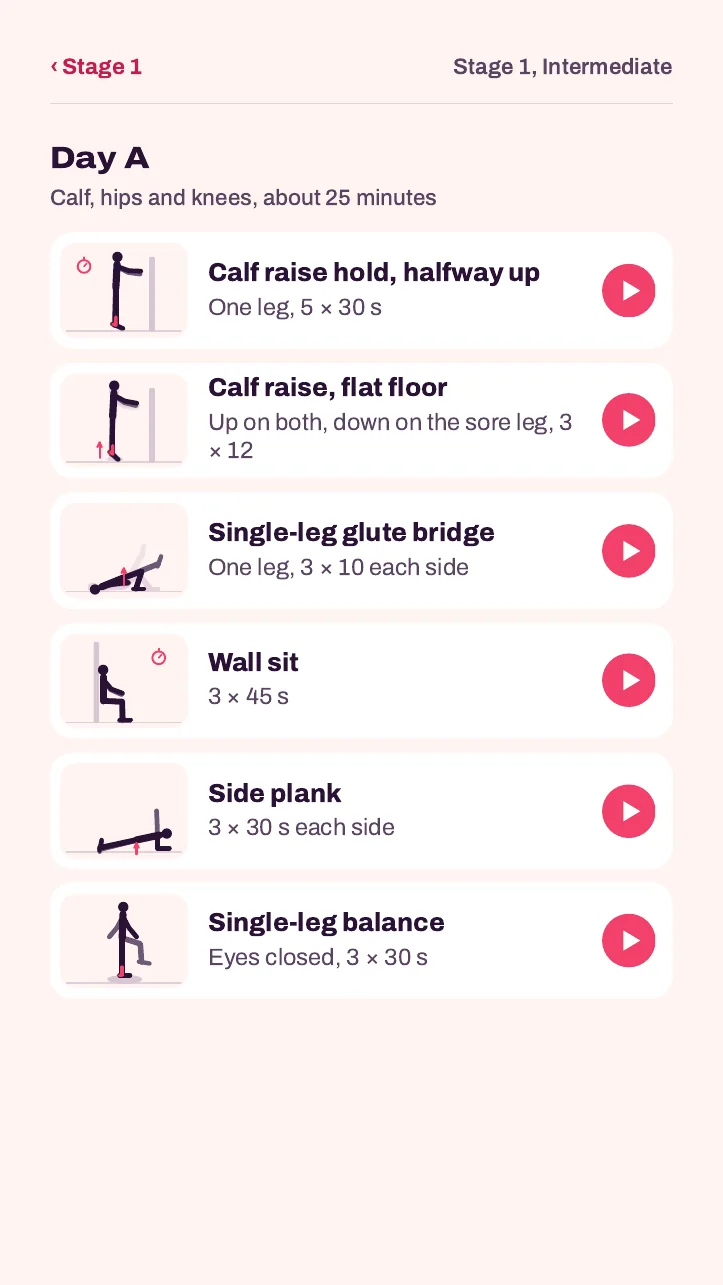
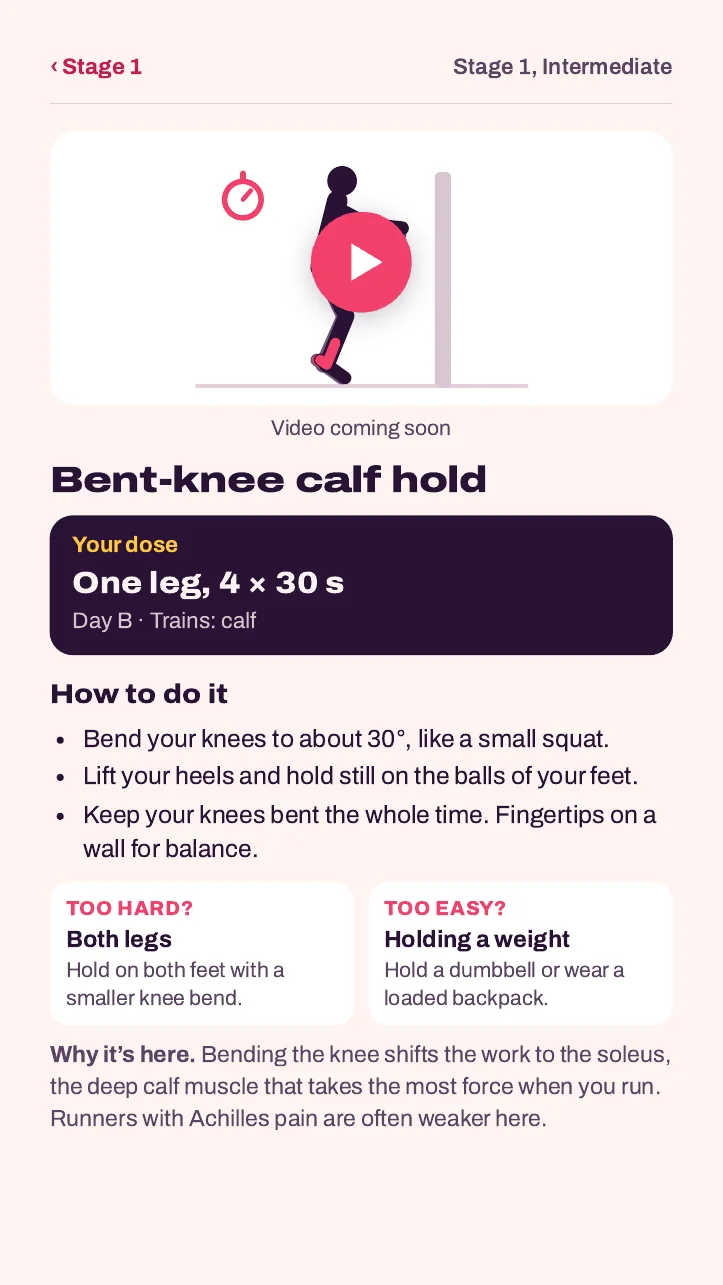
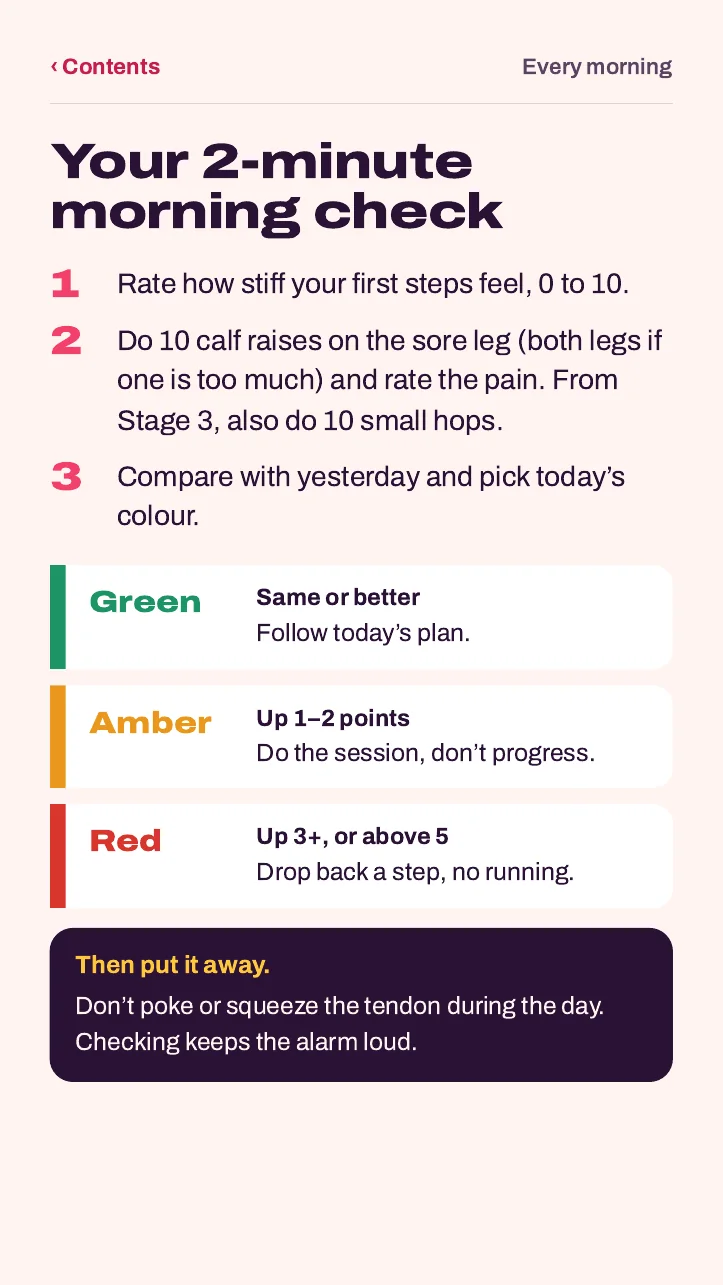
- Built on tendon researchEvery lesson and loading rule links to its source.
- Written by a clinicianA certified athletic therapist, not a fitness influencer.
- Made for youRunner or HYROX editions, for women and for men.
- All 3 levels includedMove up or down whenever you need to.
Why it keeps coming back
Rest. Flare. Repeat. Sound familiar?
Most Achilles pain is a load problem, not damage. Resting lets the tendon lose capacity, so going straight back to training flares it up again.
The way out is to keep the tendon loaded within clear pain rules and add a little each week, from your foot all the way up to your hips. That’s the whole programme.
How it works
Three steps, then you just follow the plan.
Pick your edition
Running or HYROX. Women or men. Two taps, and you get a plan built for your sport and your body.
Take the 1-minute test
Count your single-leg calf raises to find your level: Beginner, Intermediate or Advanced. All three come with your plan.
Follow your week
A 2-minute morning check gives you a green, amber or red day, so you always know whether to push on, hold or step back.
12 weeks, 4 stages
Four lanes back to full training.
Each stage ends in a test, so you only move on when your tendon is ready. Not when the calendar says so.
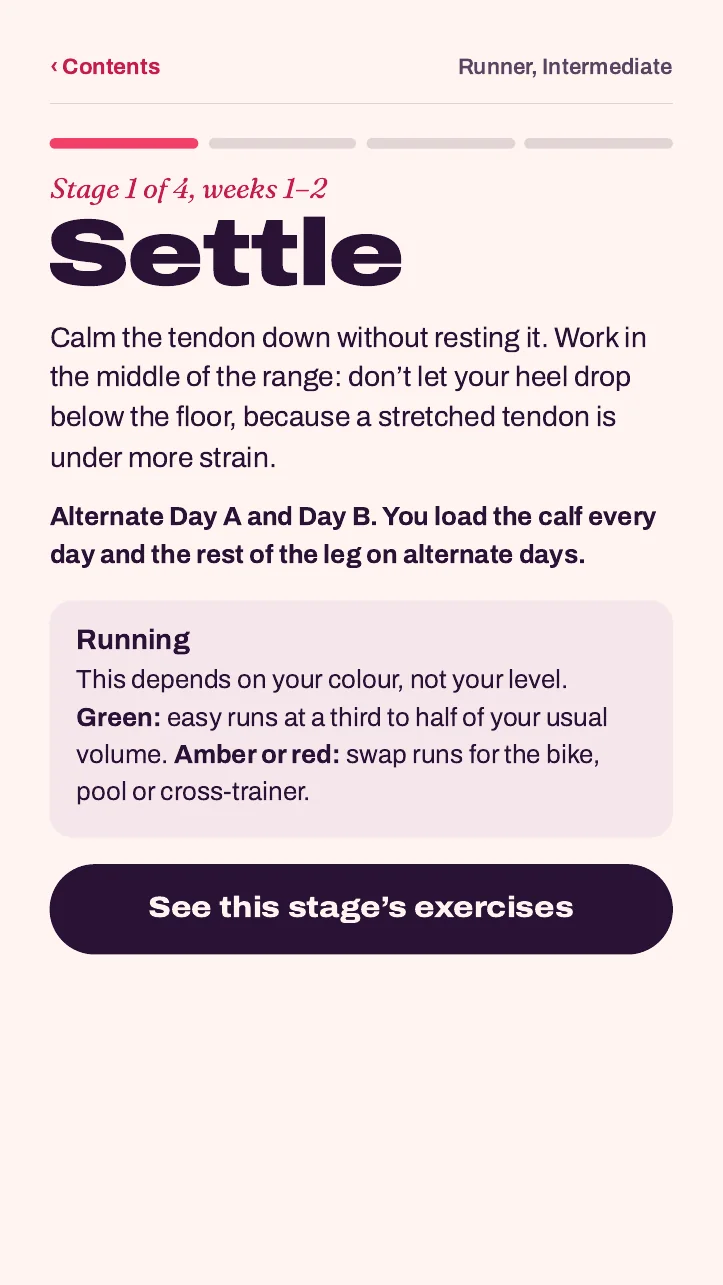
Settle
Weeks 1–2Calm the tendon down without resting it. Calf work every day, the rest of the leg on alternate days.
Build
Weeks 3–5Strength one leg at a time, from foot to hip, while a walk-run plan brings running back.
Strong
Weeks 6–8Heavy calf work and hopping. The stage most people skip, and why their Achilles flares again.
Return
Weeks 9–12Speed, hills or HYROX stations come back one at a time, until you pass the finish test.
Spend at least 2 weeks in each stage. Tendons adapt more slowly than muscles.
What’s inside
Everything you need. Nothing to work out yourself.
Not just calf raises
22 to 26 exercises from foot to hip. The calf stays the backbone, and your hips, knees, trunk and foot learn to share the load.
Tap to watch
Every exercise links to a short video showing the easier, main and harder versions, so you can adjust on the spot.
The why, in 2 minutes
Pain, fear, sleep, stress, fuel and running form, each placed in the stage where you need it.
Know when to push
Clear rules for when to carry on, hold or step back, plus the warning signs that mean get checked.
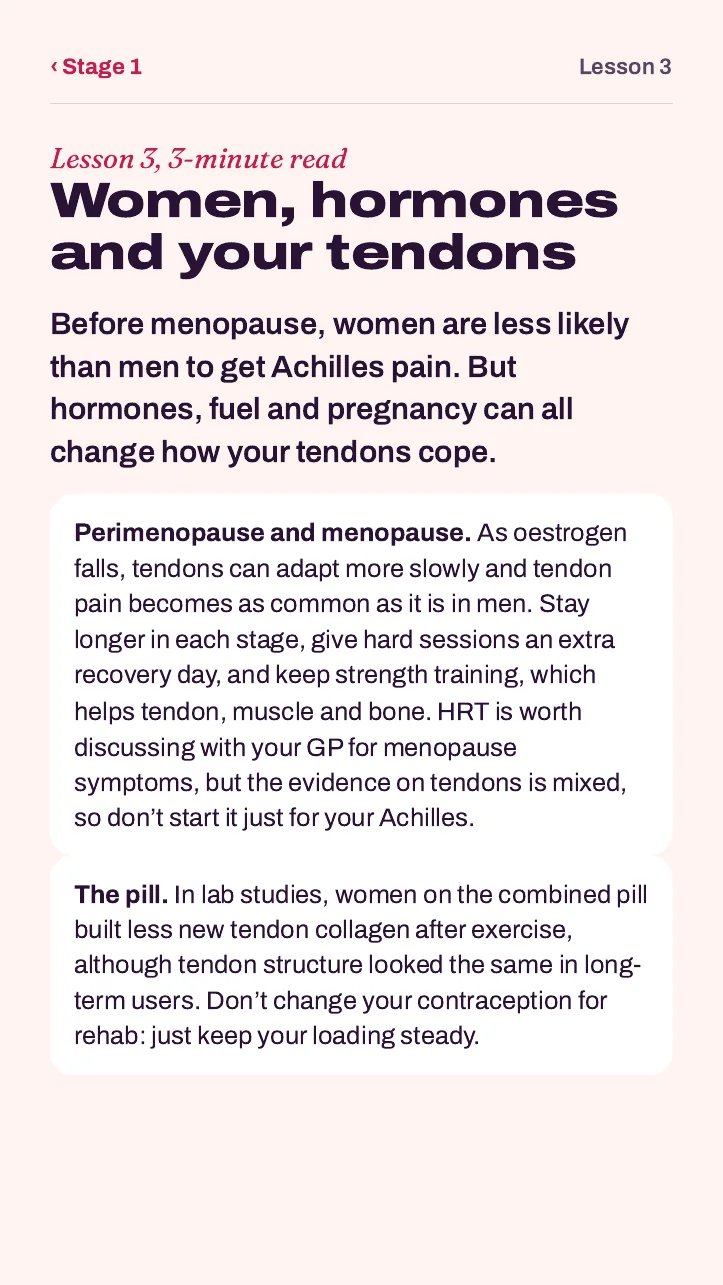
Your hormones, your tendons
Menopause, the pill, under-fuelling and running after a baby, in the women’s editions.
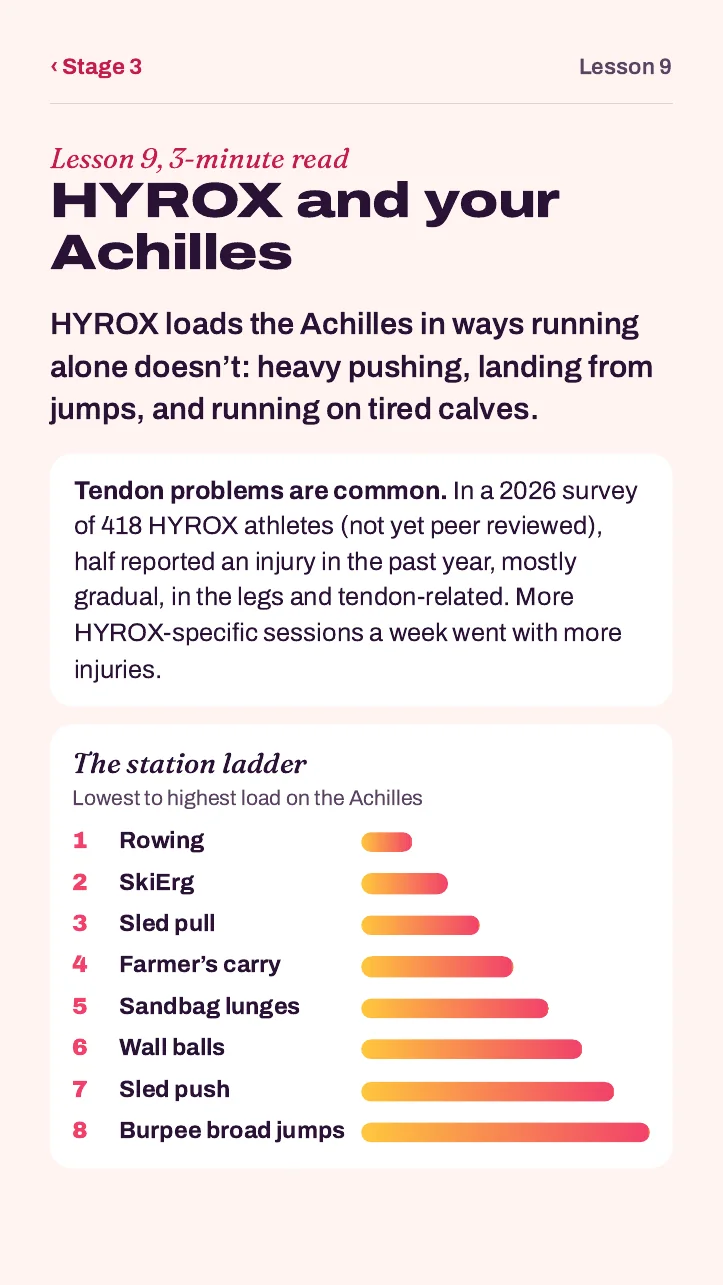
The station ladder
Stations come back in order of Achilles load, ending in a half simulation, in the HYROX editions.
Choose your edition
Two taps to your plan.
Same price, same 12 weeks. Your edition decides the sport-specific stages and the guidance built around your body.
Runner edition for women
Achilles Return to Run
Secure checkout with Payhip. Apple Pay, Google Pay, card or PayPal. Instant download to your phone.
Is it right for you?
It fits if
- The pain built up over days or weeks, often after more mileage, speed, hills, jumps or a race block.
- The tendon is stiff first thing or at the start of a session, then eases as you warm up.
- You can walk normally and do at least a few calf raises on the sore leg.
It’s not for you if
- It started suddenly with a snap or a feeling of being kicked in the back of the ankle.
- You’ve had Achilles surgery or a rupture.
- Your calf is hot, red or swollen, or you feel unwell.
Any of the “not for you” signs? Get seen the same day. This programme is general education and doesn’t replace an assessment.
Free
Try Stage 1 tonight.
Get the pain rules, the 2-minute morning check and your first week of exercises, free. If it helps, the full plan is there when you’re ready.
You’ll get Stage 1 and the occasional Restride email with tips and new programmes. Unsubscribe in one click. Privacy
The free sample opens soon.
Questions
Before you start.
Do I need a gym?
Not at first. Stages 1 and 2 need a wall, a step and a dumbbell or loaded backpack. From Stage 3 you’ll want heavier weights, so a gym helps, and the Advanced level assumes you have one.
How long does it take each day?
About 25 minutes in Stage 1 and around 35 minutes on strength days later on, plus your 2-minute morning check.
What if it hurts?
Some discomfort is expected, because tendons get stronger when you load them. Clear pain rules tell you when to carry on, hold or step back, and every exercise has an easier version.
Which level am I?
You’ll find out with the 1-minute calf raise test at the start. You get all three levels, so you can move up or down at any point.
How do I get it?
Pay through Payhip and download straight away. There’s no account to set up. It’s a phone-friendly PDF, so it works on any device.
Is this medical advice?
No. It’s general education for adults with gradual Achilles pain, not a diagnosis. If you’re unsure whether it suits you, get assessed first.
Who wrote it?
Aarron Martyn, a certified athletic therapist, building on published tendon research and the practical work of tendon specialists. Every study is listed and linked inside the programme.